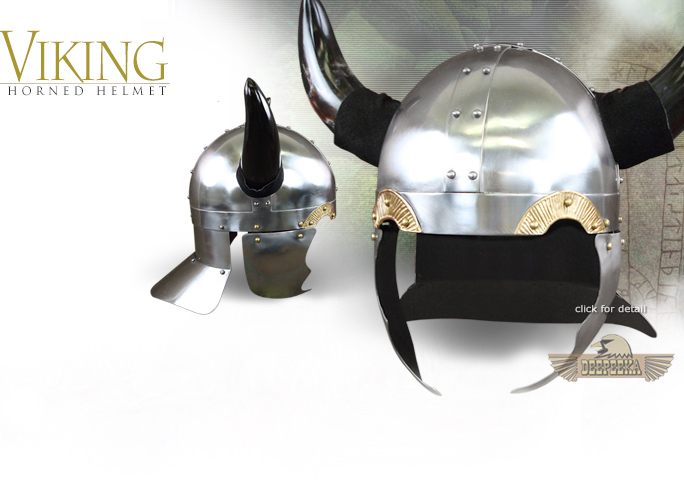
VIKING HORNED HELMETAH3807 DEEPEEKA This Viking Horned Helmet is made of 18 gauge steel with neck guard and hinged cheek guards. Two brass brows decorate each eye cutout secured to the helm with brass rivets. Dual rows of steel rivets line the crown supports. The interior of the helm is unlined and is blackened to hinder rusting. Each horn is screwed into the side of the helmet, and can be tightened from the inside with a screwdriver if necessary. The horns are real animal horn, wrapped with stitched suede leather at their bases. Hand hammered construction by artisan smiths of Deepeeka of India, this helm is constructed in the old Viking tradition! Perfect for a long day of reenactment, historical interpretation, costume or roleplay. One size fits most. (See the optional leather liner kit linked in the recommended accessories list below to make your helm a custom fit and comfortable wear on the Norseman noggin!)
• Overall Height: 14''
• Side to Side: 7-3/4" • Front to Back: 8-1/2" • Circumference: 26-1/2'' • Cheek Guards: 7" Hinged • Nose Guard: 5'' • Weight: 3 lb 14 oz • Gauge Steel: 18
Specs may vary slightly from piece to piece. Because the horns are real animal horn, their coloring and patterning will vary.
Below are recommended accessories for wearing, displaying, and maintaining your hand forged Viking Horned Helmet:
HORNED VIKING HELMETS - A History Mystery
Although horned helmets are in popular culture often associated with Vikings, there is scarce physical evidence that Viking Age Scandinavians found them popular as actual headgear. The attribution probably arose in 19th century Swedish Romanticism. The image was so widespread by the mid-20th century that the helmet logo of the present day Minnesota Vikings football team is a horn on each side of the helmet. However, there is some evidence that they are featured in Norse mythology: Odin's chosen warriors, the Einherjar, reputedly wore helmets "horned like bulls" and "beaked like eagles".
A Migration period (5th century) metal die from Öland, Sweden, depicts a warrior with a helmet adorned with two dragons or serpents, arranged in a fashion similar to horns. Also, a decorative plate affixed to the famous Sutton Hoo helmet (ca. 600 AD) shows a depiction of a similar helmet. This strange headgear, of which only depictions have survived, seems to have fallen out of use with the end of the Migration period.
There is a single depiction on a Viking Age amulet found in Uppland, Sweden that shows a figure with two snakes or dragons on its head. Another instance of a possible depiction of a Viking Age horned helmet, is found on a dubious tapestry illustration uncovered in the Viking age Oseberg ship burial which was found in a large burial mound at the Oseberg farm near Tønsberg in Vestfold county, Norway.