NORMAN HELM with AVENTAIL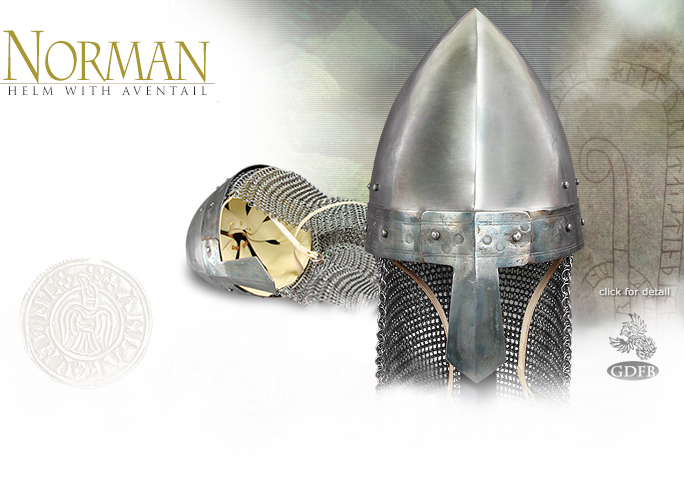 AB1676 by GDFB AB1676 by GDFB
The name "Normans" derives from Nortmanni (Northmen), after the Vikings who founded Normandy. This Norman style conical nasal helm is made from 16 gauge steel. The brow band and ridged nasal is antiqued for a worn and forged appearance. It has an integrated leather suspension with an adjustable leather tie to alter the internal fit of the helmet. Battle ready for the reenactor, the Norman Helm has an adjustable leather chin strap and buckle to keep the helm affixed to the head during the whirl of melee. The chainmail aventail is made from butted mild steel rings and measures approximately 13 inches in length.

|
|
|
The Normans
Descended from Vikings, Norman culture had all the right ingredients to make a people of conquest, for they were skilled at arms and seamanship, innovative in warfare, adventurous in spirit, and had a social structure that created many landless knights; younger, skilled sons eager to carve out their own fiefdoms. This volatile mix created the sea invasion force that famously took England from Saxon King Harold in 1066. It gave momentum to the warriors who sailed into the far Mediterranean to forcibly evict the Moors from Sicily - creating an island base from which successor generations would embark onto the Crusades, creating the Norman-founded Crusader Principalities of Antioch and Galilee.
|
|